

The First Open IP Online Tournament: What We Learned
# The First Open IP Online Tournament: What We Learned
The first Open IP online tournament is officially in the books.
The event brought together 21 players and gave us our first real look at what the format can do in a competitive setting. Until now, most Open IP discussion had been theoretical. Players could look at card interactions, build lists, and test ideas, but there had not yet been a full tournament where those decks had to perform across multiple rounds.
This event gave us that first sample.
The tournament was organized and hosted by XPStore through the Experience Rick Discord, with commentary by me, ProDMJoey and Weebspirit. Players submitted decks built under the current Open IP rules, including printed proxies, and competed through the full event.
The complete standings and deck lists can be found here:
https://exburst.dev/ua/en/tournaments/8589
## The Event Was a Success
The most important result from the tournament was that the format worked.
Players were able to build around cards and strategies that would not normally be available together, and the event still felt like Union Arena. The decks were different, but the normal fundamentals of the game remained important.
Energy development still mattered.
Card advantage still mattered.
Knowing when to attack, block, or hold resources still mattered.
Open IP did not replace those parts of the game. It gave players more tools to work with while making those decisions.
The turnout was also encouraging. Twenty-one players is a strong number for the first online event using an unofficial format, especially when everyone had to learn a new deckbuilding system and submit lists for review.
There were also very few issues during the event. Players were prepared, the rules were clear enough for the tournament to run smoothly, and the majority of the questions that came up were resolved quickly.
That gives us a good foundation for future events.
## Uta Was the Most Represented SR
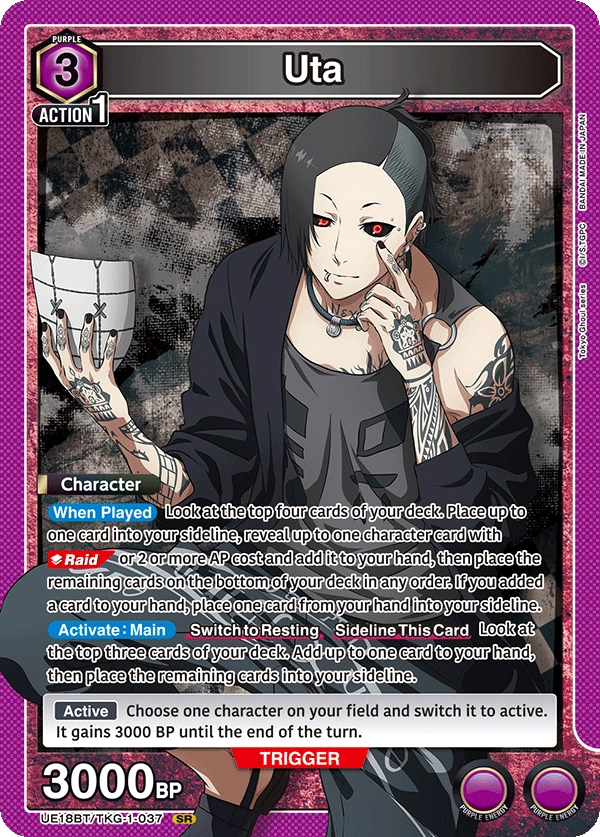
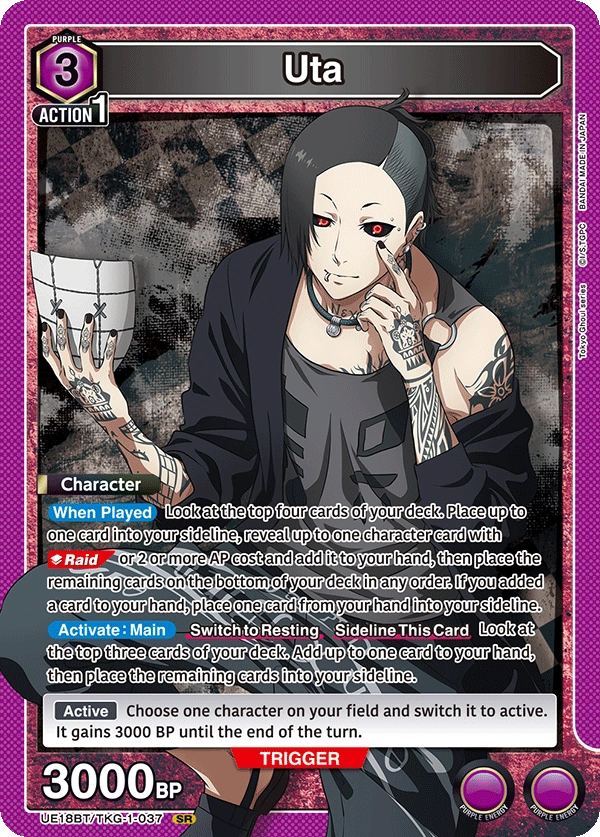
One of the clearest takeaways from the deck lists was the number of players using Uta.
Uta was the most represented SR in the tournament, and it was not difficult to understand why.
Open IP rewards cards that are useful without requiring a large amount of dedicated support. Uta fits that description well. They can be placed into different shells, provides value, and does not need the entire deck to be built around them before they become useful.
That makes them a natural fit for a format where players are trying to improve older decks or fill specific weaknesses.
Some players used Uta to support existing engines. Others used Uta as part of a broader value package. In both cases, flexibility made them one of the easiest cards to include.
The important thing to watch going forward is whether Uta remains a healthy staple or becomes too automatic.
There is nothing wrong with a card appearing in a large number of decks, especially in the early stages of a new format. Players naturally begin with cards that are easy to understand and broadly useful.
The question is whether deckbuilding continues to develop around them, or whether every strong list begins to look the same because of the card.
For now, Uta looks like one of the defining staples of Open IP.
## Purple Was the Most Represented Color
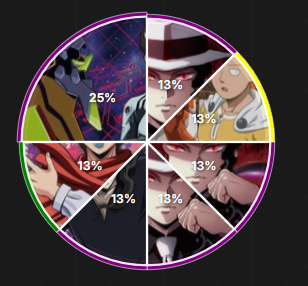
Purple was the most represented color by a wide margin.
That is not particularly surprising.
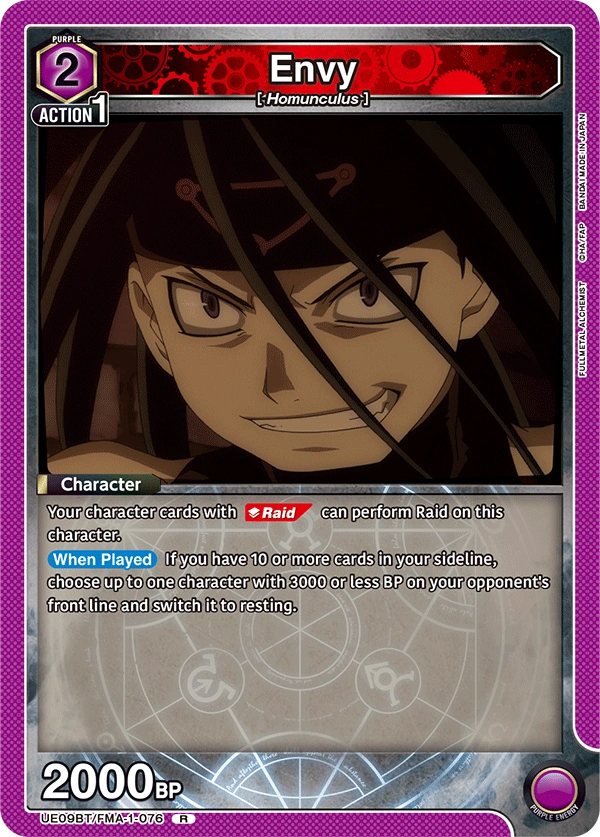
Purple has a long history of being one of the strongest colors across Bandai card games. It often has access to strong resource generation, card draw, recursion, cost reduction, and flexible removal. Those mechanics become even more powerful when players are allowed to combine cards from multiple titles.
Open IP gives Purple access to more engines, more support cards, and more ways to connect pieces that were never designed to be played together.
 ,
, ,
,
Purple also has a natural advantage in an early format like this one.
When players are still learning what works, flexible value cards are easier to trust than narrow synergy pieces. A card that draws, ramps, recovers, or removes something will usually be useful even when the rest of the deck is still being refined.
That made Purple an obvious starting point for many players.
The color was not represented because every Purple deck was identical. There were several different approaches, but many of them were built around the same general strengths.
This is something future events should continue to monitor.
Purple being popular is not automatically a problem. It only becomes a concern if the color begins to push other strategies out of the format or if the same small group of cards appears in every successful list.
## Aggro Was Underrepresented
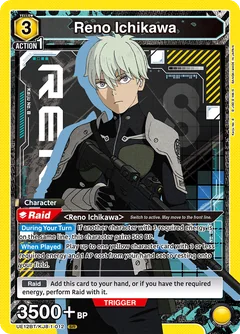
The event had a noticeable lack of synergistic aggro decks.
There were aggressive cards and decks capable of applying pressure, but very few lists were built around a complete, efficient aggro plan.
Most players leaned toward value, control, midrange, or combo-oriented ideas instead.
There are a few likely reasons for this.
The first is that Open IP naturally attracts players who want to experiment. When given access to cards from every title, many players are more interested in building engines and creating unusual interactions than playing a straightforward aggressive deck.
The second reason is that aggressive decks require more synergy than they may appear to need.
A strong aggro deck is not just a group of cheap attackers. The cards need to support the same plan, maintain pressure, replace themselves, and close the game before the opponent stabilizes.
That becomes harder when players are mixing titles and trying to find pieces that work together cleanly.

This may be one of the largest areas for future development.
If players can find the right combination of low-cost pressure, card advantage, and finishing power, a real Open IP aggro deck could punish many of the slower lists that appeared in the first event.
The format currently has a large number of players trying to build value engines. A well-built aggro deck could take advantage of that.
## The Strongest Decks Still Had a Clear Plan
One of the biggest lessons from the event was that access to more cards did not make random piles successful.
The better-performing decks still had a clear plan.
They were not simply filled with individually strong staples. The cards supported a specific strategy, solved a problem, or improved an existing engine.
This was especially clear when comparing the stronger lists to some of the more experimental ones.
The weaker lists often included several powerful cards that did not work toward the same goal. The stronger lists used outside cards to improve consistency, interaction, card draw, or finishing power.
That is probably the most important deckbuilding lesson from the first event.
Open IP does not reward adding every strong card you can find.
It rewards understanding what your deck is missing and finding the right cards to fix it.
## Older Decks Gained Real Support
One of the main goals of Open IP was to give older and under-supported decks more options.
The tournament showed that this is possible.
Several decks were able to add cards that improved weaknesses they had in standard play. Some gained better early-game pieces. Some gained stronger removal. Others gained draw, recovery, or new finishers.
Not every old deck became competitive, but many of them became more functional.
That is an important distinction.
The format does not need to make every deck equally strong. It only needs to give players more meaningful ways to build and improve those decks.
The first event showed that Open IP can do that.
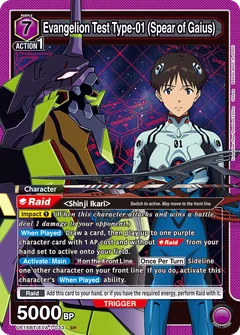
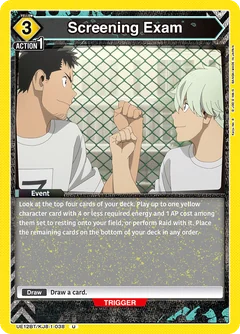
## Staples Are Beginning to Form
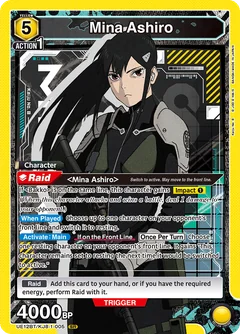
Uta was the most represented SR, but it was not the only card that appeared across multiple lists.
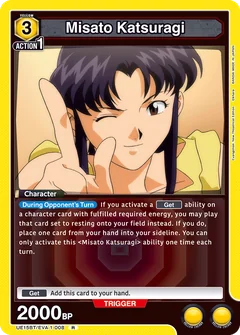
The tournament began to show us which cards players see as the early staples of the format.
These cards generally shared a few qualities:
They were useful without requiring a full title-specific engine. They helped with consistency. They generated cards or energy in unique ways. They answered common threats. * They could fit into multiple strategies without changing the entire deck.
This is normal for a new format.
Players begin with the most obviously useful cards, then move away from them as more specialized strategies develop.
The current staple list should not be treated as permanent. It is only the first version of the format.

## What Needs More Testing
The first tournament gave us useful information, but it was still only one event with 21 players.
That is enough to identify patterns, but not enough to make final decisions about the format.
There are several areas that need more testing.
### Aggro
The format needs more players actively trying to build cohesive aggressive decks.
### Color balance
Purple was far ahead of every other color in representation. Future events will show whether this was an early deckbuilding preference or a larger balance concern.
### Staple concentration
Cards like Uta should be watched to see whether they remain flexible options or become required inclusions.
### Restricted cards
The current rules and restrictions worked for this event, but future decks may discover combinations that need closer attention. One bit of feedback the players gave was to adapt the standard play ban and restriction list to ours for ease of access. This will be explored in the future.
### Going second and early-game consistency
Open IP allows stronger card packages, which may increase the importance of early energy development and opening hands. More events will help determine whether certain decks become too consistent or too difficult to disrupt.
## Takeaways From the First Event
The first Open IP online tournament gave us several clear takeaways.
The format can support a real competitive event.
Players are interested in building outside the normal title restrictions.
Purple is currently the most popular color.
Uta is the most represented SR and one of the first major staples of the format.
Aggro is underdeveloped and may be one of the best opportunities for future deckbuilders.
The strongest lists were not random collections of good cards. They had clear plans and used Open IP cards to improve those plans.
Most importantly, the event gave players a reason to revisit decks and cards that had been sitting unused.
There is still a lot to learn, but the first event gave us a much better idea of where the format is heading.
## Final Thoughts
The first Open IP tournament went better than expected.
The turnout was strong, the event ran smoothly, and the deck lists showed a wide range of ideas. Some of those ideas were experimental. Others already looked competitive.
There will be adjustments as the format develops. Staples will change, new combinations will be discovered, and some cards may eventually need restrictions.
For now, the first event gave Open IP a successful starting point.
The full rankings and deck lists are available below:
https://exburst.dev/ua/en/tournaments/8589
The next step is more testing, more events, and more players trying to find what the format can support.